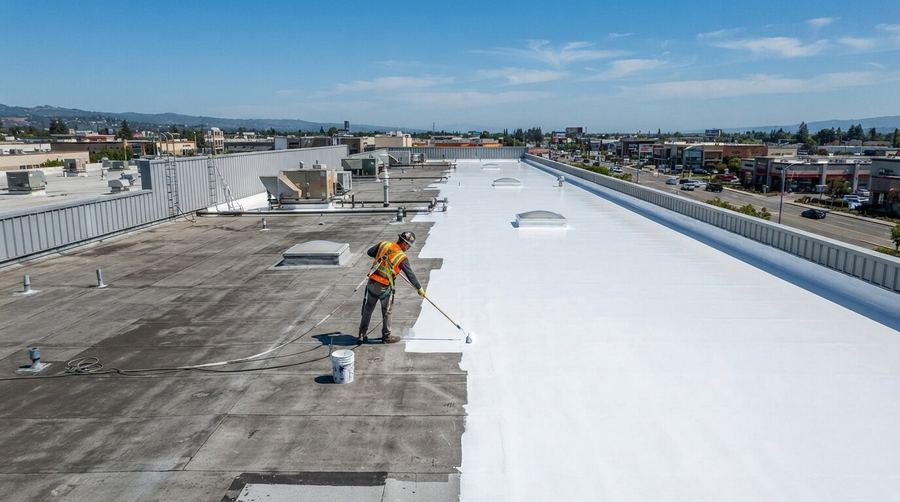
Quick answer: A roof coating is a fluid-applied, seamless membrane sprayed or rolled over an existing roof that waterproofs the surface, blocks UV and weather exposure, and in most cases reflects solar heat. It genuinely extends roof life because it stops the specific things that age a membrane, including UV breakdown, oxidation, and small leaks at seams and penetrations, rather than just hiding wear. It works on roofs that are still structurally sound and dry underneath, not on roofs with wet insulation or deck damage.
Property managers hear the term roof coating used loosely, sometimes interchangeably with paint, sometimes with a full restoration system. The two are not the same thing, and the difference matters because it determines whether a coating is a smart use of a maintenance budget or a way to seal a problem inside the roof.
What a Roof Coating Actually Is
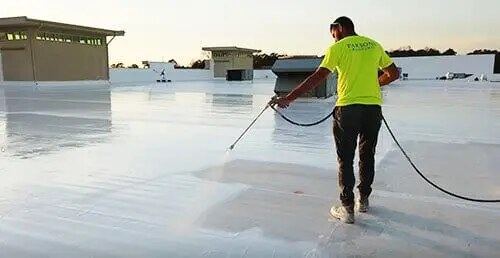
A roof coating is a liquid material applied directly over an existing roof membrane that cures into a continuous, seamless, elastomeric layer. Unlike paint, which mainly changes color and offers little protection on its own, a roof coating is thick enough and flexible enough to actually waterproof the surface and move with the roof as it expands and contracts through temperature swings. Coatings are typically applied at a measured thickness, described in dry mils, and most manufacturers specify a minimum thickness to qualify for a warranty.
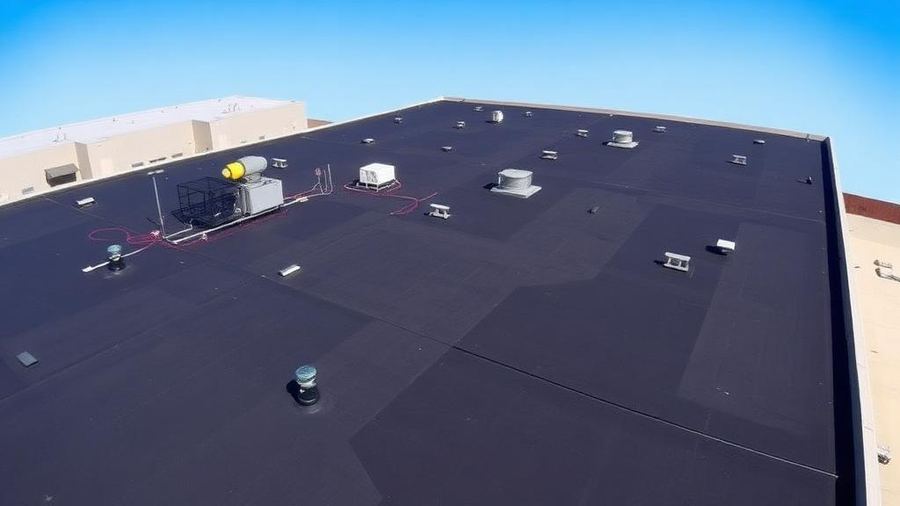
Before a coating goes down, the roof gets cleaned, any ponding or drainage issues get addressed, and seams, flashings, and penetrations get reinforced, usually with a fabric or mesh embedded in a base coat. The coating is not a standalone fix for a roof that is already failing; it is a system applied to a roof that is still sound.
The Main Types of Commercial Roof Coatings
| Coating type | Best suited for | Notable trait |
|---|---|---|
| Silicone | Roofs with ponding water or frequent UV exposure | Holds up to standing water better than most other coatings |
| Acrylic | Sloped roofs with good drainage | Lower material cost and easy to apply, but softens under standing water |
| Polyurethane | Roofs that see foot traffic or mechanical wear | More abrasion and impact resistant than silicone or acrylic |
| Aluminum / asphalt-based | Older modified bitumen and built-up roofs | Lowest reflectivity of the group, mainly used for basic UV protection |
The right type depends on the existing membrane, the roof's drainage, and how the roof is used day to day, not on which coating happens to be cheapest to apply.
How a Coating Actually Extends Roof Life
A coating adds years to a roof by interrupting the specific processes that age a membrane:
- UV and oxidation protection. Sunlight breaks down exposed membranes over time, making them brittle. A coating absorbs that exposure instead of the membrane underneath.
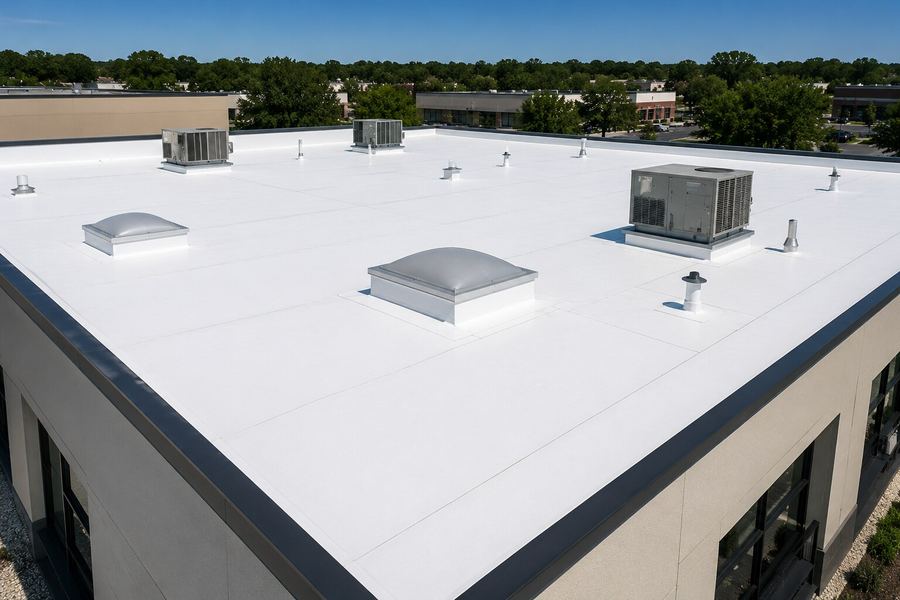
- Reflectivity. Light-colored coatings reflect a large share of solar heat rather than absorbing it, which lowers peak surface temperature and reduces the daily expansion and contraction that fatigues seams over the years.
- Seam and seal reinforcement. The reinforcing fabric applied at seams, flashings, and penetrations during prep closes the specific spots where most roof leaks actually start.
- Continuous waterproofing. Because the coating cures as one seamless layer, there are no new laps or joints introduced that could become future leak points.
None of that rebuilds a roof. It protects the roof that is already there from the forces that would otherwise shorten its life, which is why a coating only works as intended on a roof that is already in reasonably sound condition.
What a Coating Cannot Fix
- Wet insulation under the membrane — a coating seals moisture in rather than drying it out
- A deteriorated or soft deck
- Structural slope or drainage problems that cause chronic deep ponding
- A membrane that has already failed across large areas of the field, rather than just at details
A moisture survey before coating is the only reliable way to confirm the roof is dry enough underneath to be a good candidate.
Is Your Roof a Good Candidate?
- The membrane is weathered or chalking on the surface, but not split or torn open across large areas
- Any existing leaks are localized to specific seams or penetrations, not widespread
- The deck and insulation are dry and structurally sound
- Ponding, if present, is shallow and drains within a day or two
- The roof has not already been coated past the number of times the manufacturer allows
How Long a Coating Lasts
Most commercial coating systems carry manufacturer warranties in the ten to twenty year range, depending on the coating type and the thickness applied. At the end of that period, a roof in good condition is typically cleaned and recoated rather than torn off, which is one of the main reasons coatings are used as an ongoing maintenance strategy rather than a one-time fix.
Cardin Commercial Roofing applies silicone, acrylic, and polyurethane coating systems on commercial buildings across New Jersey, all five NYC boroughs, and Nassau and Suffolk counties on Long Island. If you want a straight read on whether your roof is a coating candidate, a roof assessment will tell you.