TPO & EPDM Roofing Systems
Single-ply membrane systems are the workhorse of low-slope commercial roofing: durable, energy-efficient, and cost-effective at scale.
TPO and EPDM are the two most common single-ply membranes for flat and low-slope commercial roofs. TPO is a white, heat-welded thermoplastic membrane that reflects sunlight and lowers cooling costs. EPDM is a black synthetic rubber membrane with a long track record for durability and cold-weather flexibility. Cardin Commercial Roofing installs both across New Jersey, New York City, and Long Island and recommends the system based on the building, its exposure, and its energy goals.
If you manage a warehouse, retail center, office building, or flat-roof multi-family property, the roof over it is most likely a single-ply membrane, and when it is time to replace it, the choice usually comes down to TPO or EPDM. Both are proven systems. They are not interchangeable.
TPO vs. EPDM at a Glance
| TPO | EPDM | |
|---|---|---|
| Material | Thermoplastic polyolefin (white, reflective) | Synthetic rubber (black; white available) |
| Seams | Hot-air welded; seams become one piece with the sheet | Adhesive or seam tape |
| Energy performance | Reflective surface reduces summer cooling load | Black absorbs heat; slight winter benefit |
| Durability | Strong puncture and tear resistance | Decades of field history; excellent weathering |
| Cold-weather flexibility | Good | Excellent |
| Chemical / grease exposure | Resists many chemicals; check with restaurants | Sensitive to oils and solvents |
| Typical fit | Warehouses, retail, buildings with high cooling costs | Buildings prioritizing longevity over reflectivity |
TPO Roofing
TPO has become the most-installed commercial membrane in the country for a reason. The white surface reflects a large share of solar energy, which matters on a big flat roof over a conditioned warehouse or retail box in a New Jersey or Long Island summer. The seams are hot-air welded rather than glued, so a properly installed TPO seam is as strong as the sheet itself. It handles foot traffic and rooftop equipment well, and it is available in wide rolls that mean fewer seams on large roofs.
Where TPO needs care: installation quality is everything. Welded seams done with the wrong temperature or speed are the number one cause of premature TPO failure, which is why we test seams as we go rather than after the fact.
EPDM Roofing
EPDM rubber roofing has been on commercial buildings for more than half a century, and many of the original installs are still performing. It stays flexible in cold weather, shrugs off UV exposure and hail, and is forgiving of building movement. For a building owner who wants the longest possible service life and does not have a large cooling load, EPDM is often the right answer.
Where EPDM needs care: the seams are adhered rather than welded, so seam prep and adhesive application have to be done right. It is also sensitive to petroleum products, so restaurant exhaust and rooftop grease need to be planned for.
How We Choose Between Them
We look at the building before we recommend a membrane. A conditioned warehouse with a large roof and high summer electric bills usually gets TPO. A building where the priority is a set-it-and-forget-it roof with maximum lifespan often gets EPDM. Restaurant tenants, heavy rooftop equipment, ponding history, and the condition of the existing insulation all factor in. We put the recommendation and the reasoning in writing so you can make the call with full information.
What Is Included in a Single-Ply Installation
New insulation to current energy code, cover board where specified, the membrane itself, all new flashings at curbs, parapets, drains, and penetrations, walkway pads at equipment and access points, and a manufacturer-specified attachment method (fully adhered, mechanically fastened, or ballasted) chosen for the deck type and wind exposure. Seams are inspected and probed before we leave the roof.
What Drives the Cost
Square footage, membrane thickness, insulation thickness and tapered design, attachment method, the number of curbs and penetrations to flash, deck condition, and the warranty term. TPO and EPDM are generally close in installed cost; the decision should be about which one is right for the building, not a small price difference.
Request a Quote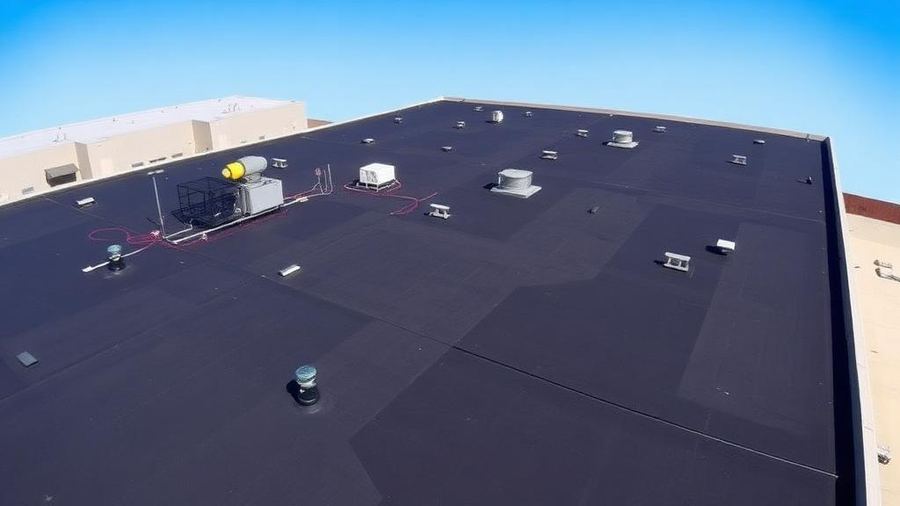
Talk to a commercial roofer
Property managers, GCs, and building owners across NJ, NYC, and Long Island. Commercial properties only.
(201) 305-9236TPO & EPDM Roofing Systems FAQ
Is TPO or EPDM better for a commercial roof?
Neither is better across the board. TPO is the better choice when reflectivity and lower cooling costs matter, such as a conditioned warehouse or retail building. EPDM is the better choice when maximum longevity and cold-weather flexibility matter more than energy savings. The right answer depends on the building, and we recommend based on an inspection.
How long do TPO and EPDM roofs last?
Both systems are designed for multi-decade service when installed correctly and maintained. Actual lifespan depends on membrane thickness, installation quality, drainage, rooftop traffic, and whether the roof gets regular inspections.
Can you install TPO or EPDM over an existing roof?
Sometimes. If there is only one existing layer and the insulation underneath is dry, a recover system may be allowed by code and by the manufacturer. If the insulation is wet or there are already two layers, a full tear-off is required. We take a core sample to find out before we quote.
Does a white TPO roof actually lower energy bills?
On a conditioned building with a large flat roof, yes. The reflective surface reduces the amount of heat the roof absorbs in summer, which lowers the load on rooftop HVAC. The effect is largest on warehouses, retail, and office buildings that run air conditioning through the summer.
What is the difference between fully adhered and mechanically fastened?
Fully adhered means the membrane is glued to the substrate across its entire surface. Mechanically fastened means it is anchored with plates and screws along the seams. The choice depends on deck type, wind uplift requirements, and the manufacturer specification for the warranty you want.
Other Commercial Roofing Services
Commercial Roof Replacement
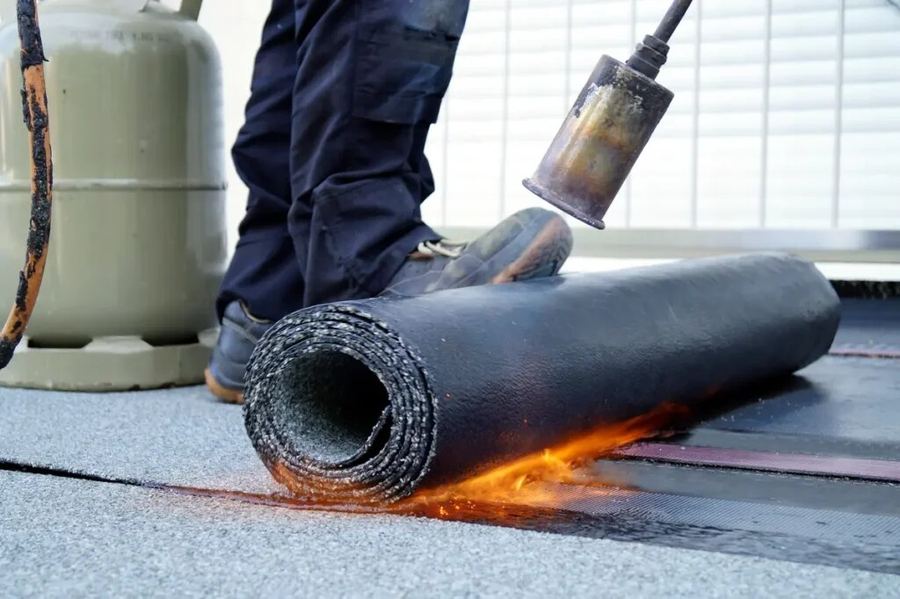
Full tear-off and replacement for aging or failing commercial roof systems.
Learn more ›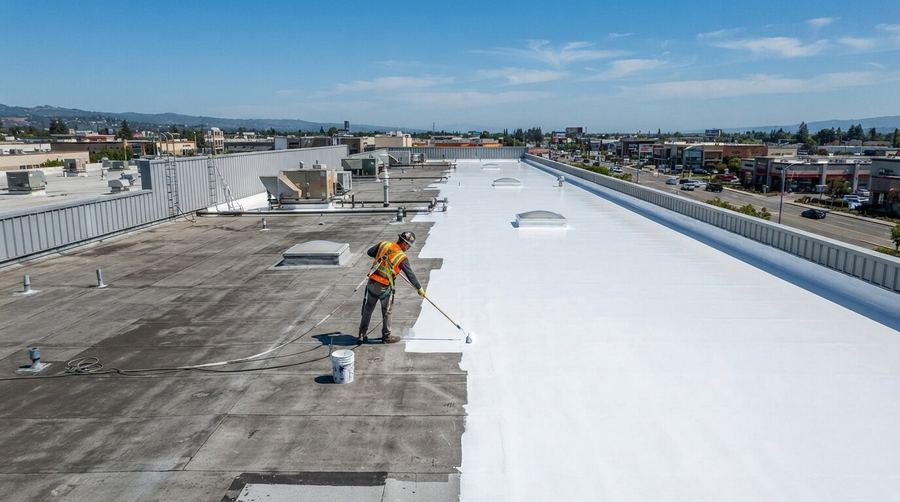
Silicone Roof Coatings
Restorative coating systems that extend roof life without a full replacement.
Learn more ›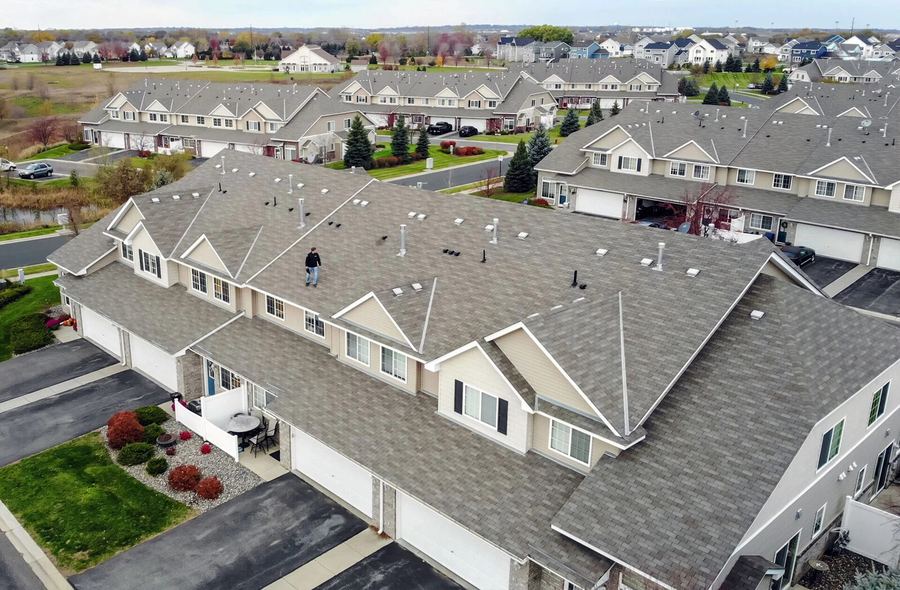
Commercial Shingle Roofing
Architectural and laminate shingle roofing for multi-family and pitched-roof commercial buildings.
Learn more ›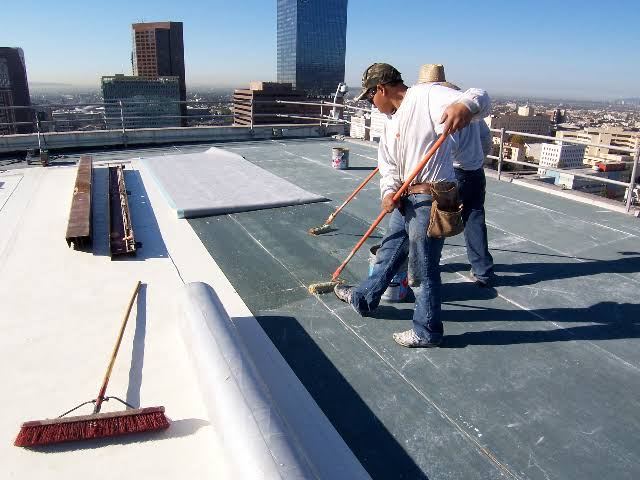
Roof Repair & Maintenance
Leak repair, preventive maintenance programs, and roof asset management.
Learn more ›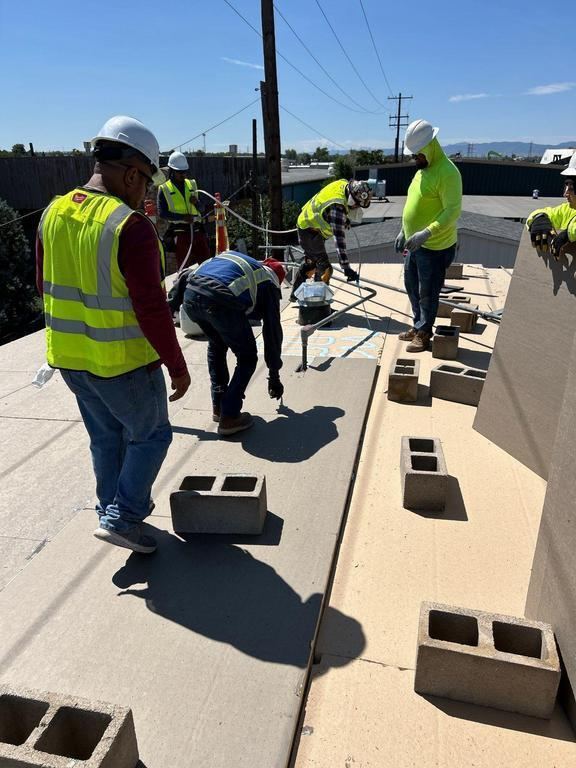
Emergency & Storm Response
Rapid response for storm damage, active leaks, and emergency conditions.
Learn more ›