
Quick answer: The large majority of commercial roof leaks start at a detail, not in the open field of the membrane: failed flashing around penetrations and curbs, deteriorated seams, clogged or undersized drains, and deck-level damage from ponding water or foot traffic are the most common causes. The earliest signs are almost never a dramatic drip through a ceiling tile. They show up first as a faint stain, a soft spot on the roof deck, or a slight bubble in the membrane, days or weeks before water becomes an interior problem.
For a property manager, GC, or building owner responsible for a commercial roof in New Jersey, New York City, or Long Island, understanding where leaks actually originate changes how you inspect, what you ask a contractor to check first, and how fast you can catch a problem before it turns into a tenant complaint or a damaged ceiling.
The Roof Rarely Leaks Where the Stain Appears
One of the most common mistakes in diagnosing a roof leak is assuming the water is entering directly above the interior stain. Water that gets under a membrane can travel laterally along the deck, insulation, or structural framing for several feet before it finds a seam, fastener, or low point to drip through. That is why a leak that appears over an office in the northeast corner of a building can sometimes originate from a failed curb flashing 20 feet away. A proper roof assessment traces the path, it does not just patch the spot under the stain.
The Most Common Sources of Commercial Roof Leaks
In order of how often they actually show up during inspections and repair calls:
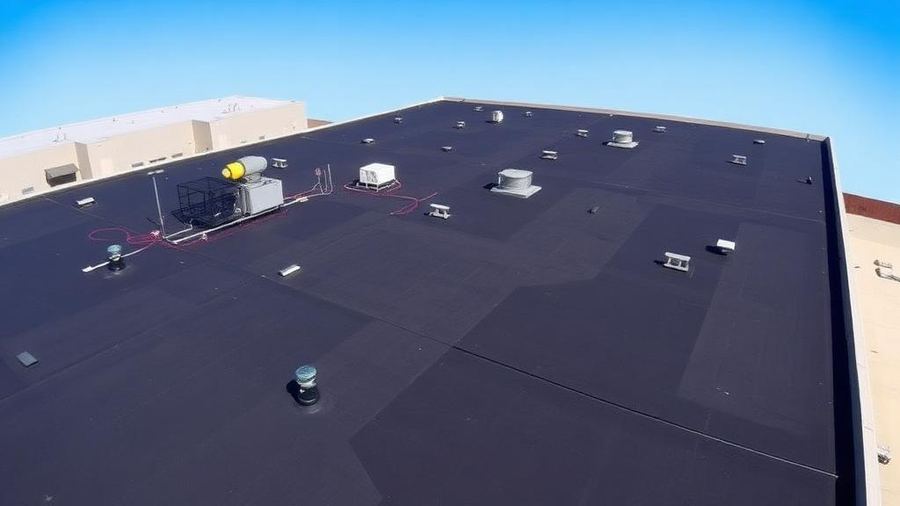
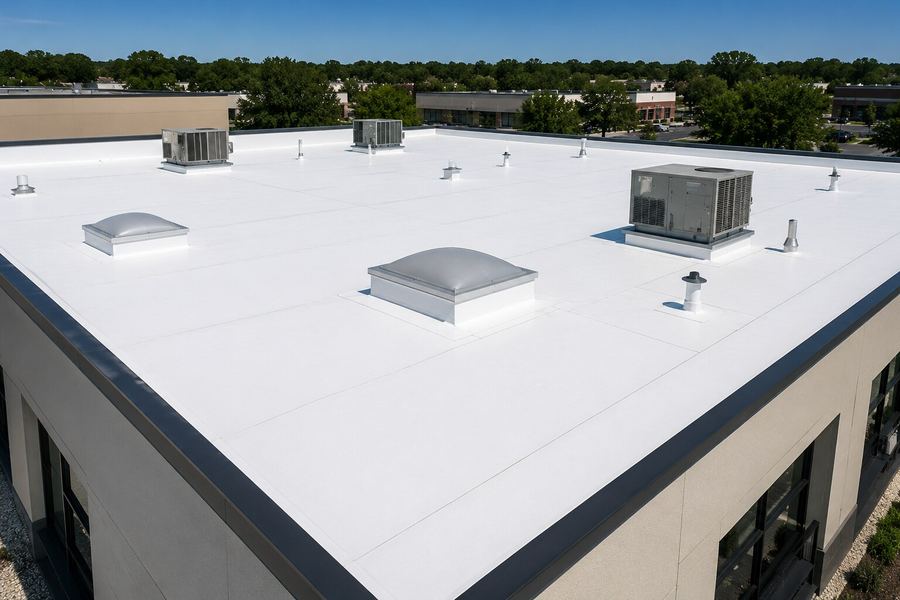
- Flashing around penetrations and curbs. HVAC units, exhaust fans, pipes, conduit, and skylights all pierce the membrane, and the flashing detail around each one is a far more common failure point than the membrane itself. Flashing shrinks, cracks, or separates from the curb over time, especially on older rooftop units that have never been re-flashed.
- Seams that were not welded, taped, or sealed correctly. A seam is only as good as the installation. Thermal cycling, foot traffic, and age all put stress on seams, and a seam that was marginal at install is usually the first thing to open up.
- Clogged, undersized, or poorly placed drains and scuppers. Leaves, roofing debris, and HVAC condensate lines run straight into drains and slowly choke them. Once a drain backs up, water ponds and finds the nearest weak point instead of leaving the roof.
- Deteriorated pitch pans and sealant. Pitch pans around pipes and small penetrations rely on sealant that has a limited service life. Cracked or shrunken sealant at a pitch pan is one of the most frequent single-point leak sources on older roofs.
- Parapet wall coping and counterflashing. Metal coping caps on parapet walls loosen or get wind-lifted, letting water behind the wall and down into the wall cavity rather than across the membrane, which is why these leaks often show up on an interior wall rather than the ceiling.
- Ponding water that has nowhere else to go. Standing water finds the smallest imperfection, a pinhole, a hairline seam gap, a fastener that has backed out, and sits on top of it with constant hydrostatic pressure until it gets through.
- Membrane punctures from foot traffic or storm debris. Dropped tools, rooftop equipment service calls without walk pads, and storm-blown debris all puncture membranes, and a small puncture can go unnoticed for months before it leaks.
- Deck-level damage. On older buildings, a roof deck that has absorbed moisture over years can deteriorate to the point that it no longer holds fasteners properly, which lets water track along the deck surface well past the original point of entry.
Early Warning Signs, Inside and Outside
| Where to Look | Early Sign | What It Usually Means |
|---|---|---|
| Interior ceiling tiles | Faint yellow or brown ring, no active drip | Slow, intermittent leak, often from a flashing or seam issue nearby |
| Interior walls near the roofline | Staining, peeling paint, or soft drywall | Water entering at parapet coping or counterflashing, running down inside the wall |
| Roof surface | Soft or spongy spots underfoot | Wet insulation under the membrane, usually from a leak that has been active for a while |
| Roof surface | Blisters or bubbles in the membrane | Trapped moisture or air, a precursor to a seam or membrane failure |
| Drains and scuppers | Standing water more than 48 hours after rain | Clogged or undersized drainage, raising the odds of a leak nearby |
| Rooftop equipment curbs | Cracked or lifted flashing edges | Active or imminent leak point at that penetration |
| Tenant spaces | Musty odor with no visible stain yet | Hidden moisture in insulation or ceiling cavity, often the first sign before a stain appears |
Why Small Leaks Should Not Wait
A slow leak rarely stays small. Water that reaches insulation keeps the roof assembly wet long after the rain stops, which accelerates membrane aging, promotes mold growth in the deck and ceiling cavity, and in cold months can freeze and expand, turning a pinhole into a larger tear. What would have been a single flashing repair in month one often becomes a section of wet insulation that needs to be cut out and replaced by month six. Catching the early signs above is what keeps a leak a repair instead of a project.
What a Property Manager Can Check Without Getting on the Roof
- Walk the top floor after a rain and check ceiling tiles, especially near exterior walls and anywhere there is rooftop equipment directly above.
- Ask maintenance or security staff whether anyone has noticed a musty smell, a new stain, or a soft spot in a ceiling, even a small one.
- Review HVAC service logs for notes about standing water near curbs or units that needed re-flashing.
- Keep a simple log of any leak reports, including the date, location, and weather, so a pattern around one area of the roof becomes visible over time instead of looking like unrelated one-off events.
When any of these show up, a roof repair and maintenance visit to trace and fix the source is almost always faster and less expensive than waiting for the leak to become obvious. If a leak follows a storm and is actively coming through, that is a different situation and calls for emergency storm response rather than a routine repair ticket.
How Often Leaks Should Be Checked For Proactively
Most commercial roofs benefit from two scheduled inspections a year, in spring and fall, plus a walk-through after any significant storm. Spring inspections catch winter damage before summer heat and UV exposure make small problems worse. Fall inspections catch summer wear and clear drains before snow and ice season. Buildings with rooftop HVAC, heavy foot traffic, or known trouble spots often do better with quarterly checks instead.
If your roof has a recurring stain, a musty smell that will not go away, or standing water that never seems to clear, a roof assessment will trace the actual source rather than guessing from the ceiling tile up.