Quick answer: Northeast weather shortens commercial roof life mainly through four mechanisms: freeze-thaw cycling at seams and flashings, ponding water that refreezes and expands through winter, wind uplift from Nor'easters and coastal storms, and the wide seasonal and daily temperature swings that fatigue membranes and fasteners over time. A roof that drains well, is flashed correctly, and is inspected twice a year will reliably outlast an identical roof that is not, even on the same block.
A commercial roof in New Jersey, New York City, or on Long Island is not working against the same climate as one in Phoenix or Atlanta. It goes through roughly 30 to 40 freeze-thaw cycles a winter, sits under snow and ice for weeks at a time, takes direct hits from coastal storms moving up the Atlantic, and swings from single digits in January to the mid-90s in July. Every one of those conditions acts on the membrane, the seams, the flashings, and the deck in a different way, and most of the damage is invisible until it shows up as a leak years later.
Why Climate Matters as Much as the Membrane You Choose
Two identical roofs, same membrane, same installer, same specification, can age at very different rates if one drains properly and the other does not, or if one gets biannual maintenance and the other gets inspected only when there is already a leak. In this climate, drainage and maintenance history are often bigger factors in how long a roof actually lasts than which single-ply membrane was installed. That does not mean the membrane does not matter, it means weather exposure and upkeep can add or subtract years regardless of the material.
Freeze-Thaw Cycling Is the Main Driver of Early Failure
Water that gets into a seam, a pinhole, a lap, or a crack in flashing and then freezes expands by roughly 9 percent. It does that every time the temperature crosses freezing, which in this region happens dozens of times a winter, not just once. Each cycle widens the opening a little more. A seam or flashing detail that would hold for years in a climate with one freeze a season can fail in two or three winters here if it was not properly sealed or welded to begin with. This is why installation quality at details, not just in the open field of the roof, matters more in the Northeast than it does in milder climates.
Ponding Water Turns an Ordinary Problem Into a Winter Problem
Ponding water is a drainage defect everywhere, but in the Northeast it becomes worse because standing water that would simply evaporate in a warm, dry climate instead freezes solid. Ice sitting directly on a membrane for days or weeks adds sustained weight, and the freeze-thaw cycle at the edge of the ice sheet works directly on the membrane underneath it. Roofs with chronic ponding areas age faster here than the same ponding condition would in a roof that never sees ice. Keeping drains, scuppers, and gutters clear before the first freeze is one of the simplest things a property manager can do to protect roof life.
Wind From Nor'easters and Coastal Storms
Buildings in NYC, on Long Island, and along the New Jersey coastline take direct wind exposure from Nor'easters and tropical systems that move up the Atlantic. Wind damage to a commercial roof rarely starts in the open field, it starts at the perimeter, the edge metal, the parapet copings, and the flashing terminations, where wind gets underneath a loose edge and begins to peel the membrane back. A roof with secure edge metal and properly terminated flashings holds up to wind events that would otherwise cause real damage, which is why edge detail is one of the first things a post-storm inspection should check.
UV and Big Temperature Swings Fatigue Seams Over Time
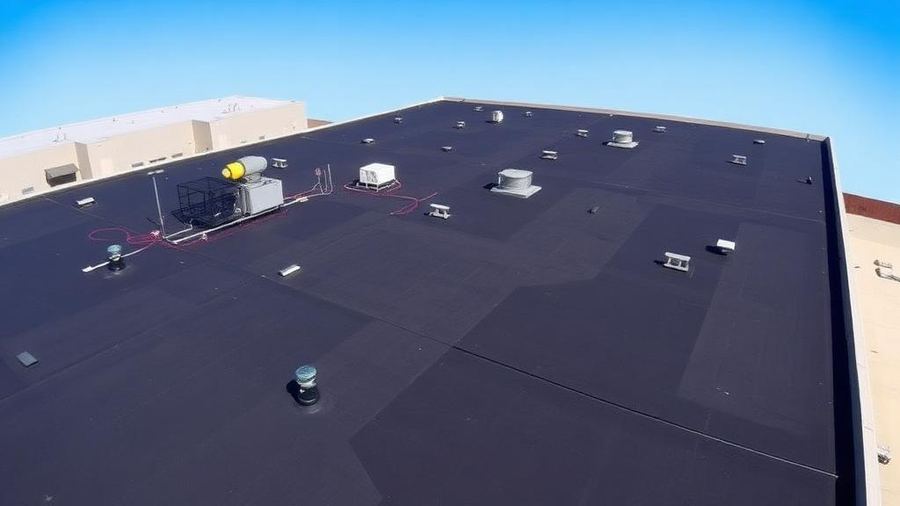
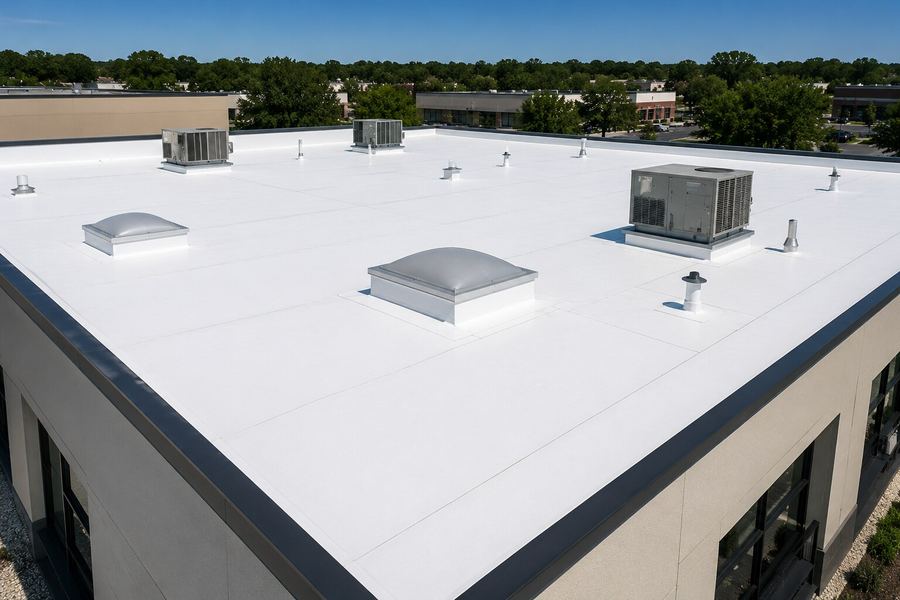
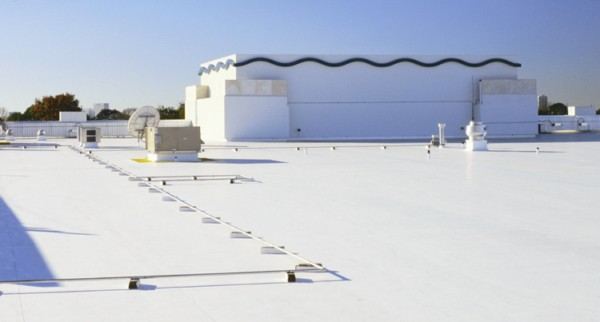
A membrane that goes from roughly 10 degrees in January to 160 degrees of surface temperature on a sunny July roof deck is expanding and contracting across a wider range than almost anywhere else in the country. That constant movement, repeated every day and every season, is what eventually fatigues seams, loosens mechanical fasteners, and dries out adhesives, independent of UV exposure itself. Reflective membranes and coatings reduce the peak summer surface temperature, which narrows that swing and is one of the reasons a white TPO membrane or a silicone-coated roof often shows less seam fatigue over time in this climate than a dark membrane with no reflective surface.
How Different Roofing Systems Hold Up in This Climate
| System | Cold-weather behavior | What to watch in this climate |
|---|---|---|
| TPO | Reflective surface limits summer thermal swing | Seam welds must be done in the installer's rated temperature range |
| EPDM | Stays flexible in cold better than most membranes | Taped seams need periodic probing for adhesion loss |
| Modified bitumen (torch-down) | Heavy, durable, handles foot traffic and ice well | Laps and flashings are where freeze-thaw damage shows up first |
| Metal roofing | Sheds snow and ice quickly off slope | Thermal movement at panel seams and penetrations needs correct detailing |
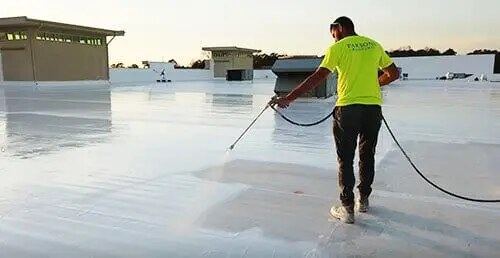
| Silicone roof coating | Reflective, reduces thermal swing on an existing roof | Only effective over a membrane that is dry and structurally sound |
What Actually Extends Roof Life in New Jersey, NYC, and Long Island
- Clear drains, scuppers, and gutters before the first freeze and after every fall leaf drop
- Inspect twice a year, in spring and fall, plus after any major storm
- Keep edge metal, copings, and flashing terminations tight, since wind finds the loose ones first
- Fix small ponding areas before winter rather than waiting for them to ice over
- Address cracked sealant and separated flashings early, since each freeze-thaw cycle widens the opening
- Keep rooftop equipment condensate lines draining away from the membrane rather than directly onto it
- Consider a reflective membrane or coating where summer thermal swing is a concern
None of this changes what membrane is right for a given building, but it does change how many years that membrane actually delivers. A roof that gets this kind of attention through a Northeast winter will reliably outlast an identical roof that does not, and the cost of the attention is always lower than the cost of an early replacement.
Cardin Commercial Roofing inspects, maintains, and repairs commercial roofs across New Jersey, all five NYC boroughs, and Nassau and Suffolk counties on Long Island. If you want a straight read on how your roof is holding up to this climate, a roof assessment will tell you.