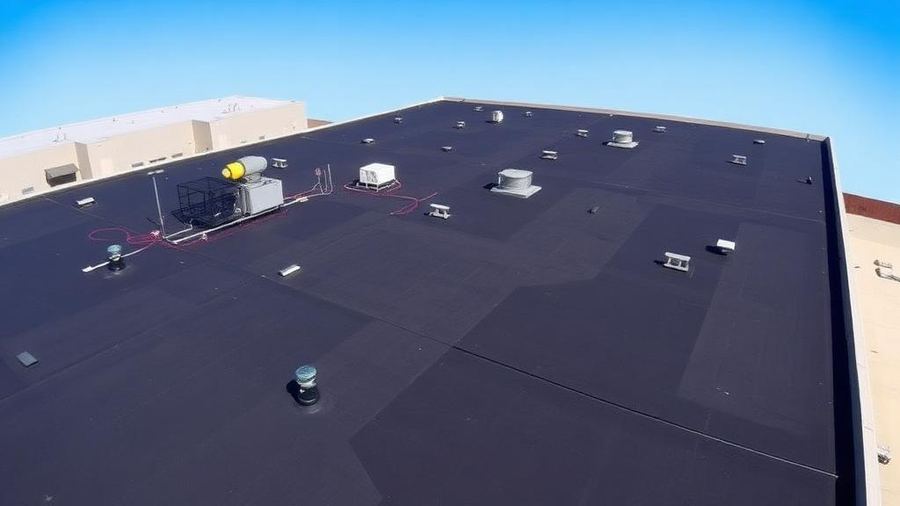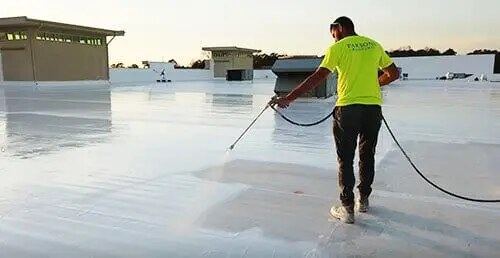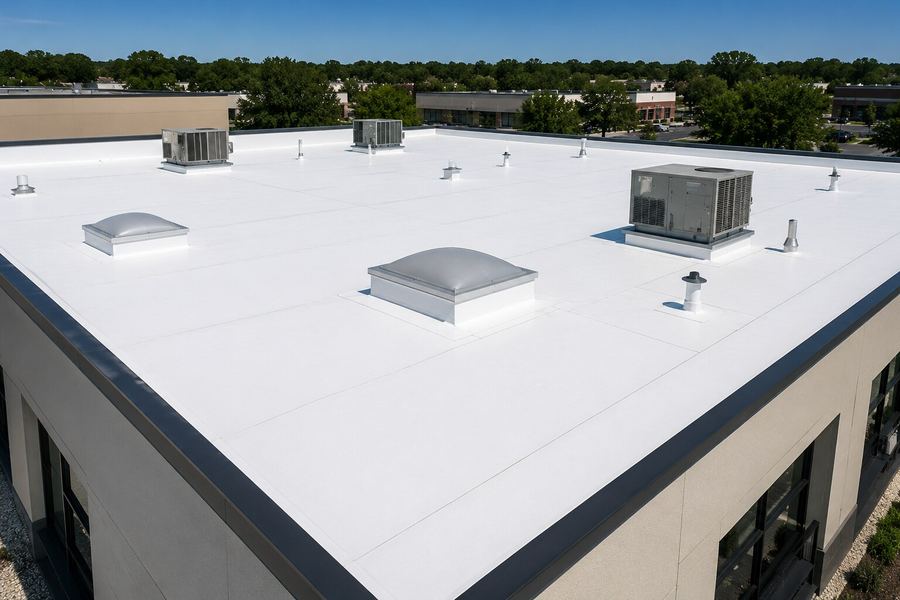
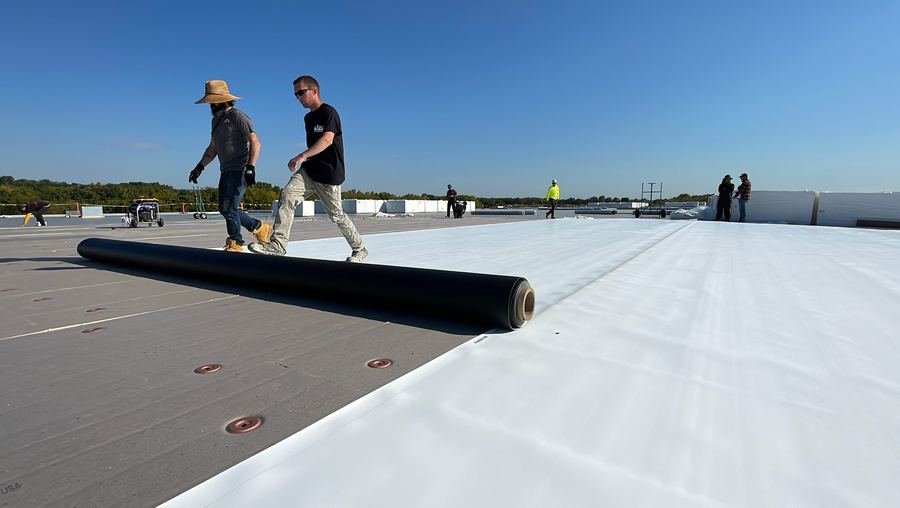
Quick answer: A complete commercial roofing scope specifies the exact system and membrane thickness, insulation type and thickness, attachment method, every flashing detail, deck repair allowances, drainage work, the warranty term and who issues it, the schedule, tenant protection measures, and closeout documentation. If a bid is missing any of those, it is not comparable to one that has them, and the gap usually shows up later as a change order.
The most expensive roofing bid is often the cheapest one. A scope that leaves out deck repair, tapered insulation, or flashing details is not a lower price; it is a lower starting point, and the difference arrives later as change orders once the old roof is off and there is no walking away. Property managers and general contractors who know what a complete scope looks like can compare bids on substance and avoid that trap.
The Scope Checklist
1. Roof system, fully specified
Not just TPO or EPDM. The manufacturer, the membrane thickness in mils, reinforced or not, and the color. For coatings, the product and the applied thickness that supports the warranty. For shingles, the product line and wind rating. Vague system descriptions are the number one source of apples-to-oranges bids.
2. Insulation and cover board
Insulation type, total thickness or R-value, number of layers, whether joints are staggered, and whether a cover board goes on top. Whether the design meets current energy code. If the roof drains poorly, whether a tapered insulation system is included to fix it, and if not, why not.
3. Attachment method
Fully adhered, mechanically fastened, or ballasted, and the fastening pattern or adhesive rate at the field, perimeter, and corners. Wind uplift is not the same everywhere on a roof, and the perimeter and corners need more attachment. This is also what the manufacturer warranty is based on.
4. Tear-off and disposal
How many layers are being removed, down to what surface, and who pays for disposal. If the bid is a recover over the existing roof, it should say so explicitly and explain why that is appropriate for this roof.
5. Deck repair allowance
Nobody knows the full condition of a deck until the roof is off. A good scope states a unit price for deck replacement per square foot or per sheet, and an assumed allowance, so surprises are priced in advance rather than negotiated under pressure.
6. Flashings and details, itemized
Curbs, parapet walls, expansion joints, drains, scuppers, pipe penetrations, HVAC curbs, and edge metal or coping. Each should be described with the material and method. This is where roofs leak and where thin bids cut corners.
7. Drainage
Whether drains are being replaced, re-flashed, or reused. Whether new overflow drains or scuppers are required by code. Whether ponding areas are being corrected with tapered insulation or crickets.
8. Rooftop equipment
What is being disconnected, raised, or worked around. Who is responsible for HVAC disconnect and reconnect. Whether curbs are being raised to meet the new roof height, which is commonly required when insulation thickness increases.
9. Warranty
The term in years, whether it is a manufacturer warranty or a contractor warranty or both, what it covers, and whether it is transferable on sale. A manufacturer warranty usually requires the manufacturer to inspect the finished roof; the scope should say whether that is included.
10. Schedule and phasing
Start date, duration, and how the work is phased so the building is watertight every night. For occupied buildings, which areas are worked when and how tenants are notified.
11. Tenant and property protection
Staging areas, crane or hoist days, protection of landscaping and paving, dust and odor control, and how the crew accesses the roof. For multi-family, how residents are notified.
12. Closeout documentation
Photo documentation of the deck before the new system goes on, of the finished roof, and of all details. Warranty paperwork issued and delivered. As-built notes on anything that changed from the scope.
Red Flags in a Roofing Bid
- A one-page price with a system name and nothing else
- No deck repair allowance or unit price
- No mention of insulation thickness or energy code
- Flashings described only as included
- A warranty term with no indication of who issues it
- A price dramatically below the others with no explanation of what is different
- No inspection or core sample before the bid was written
How to Use This
Send this list to every bidder and ask them to address each item. Contractors who do this work properly will already have most of it in their scope and will fill in the rest without complaint. The ones who resist are telling you something. Every project Cardin Commercial Roofing scopes in New Jersey, New York City, and Long Island is written to cover these items, because it is the only way the number on the page is the number you actually pay. Request a written scope for your building.